
Commercial Products
747-8 Exhaust - Spirit AeroSystems


The Boeing 747 is a family of large, long-range, wide-body airliners in Boeing’s line of aircraft. The 747-8 is the largest variant of the 747, and Boeing's largest aircraft. According to Boeing, “the 747-8 Intercontinental and 747-8 Freighter incorporate the GEnx engine—one of the cleanest, quietest, and most fuel-efficient turbofan engines in the world. It is based on the 787 Dreamliner engine, but optimized for the 747-8.”
ASTECH took full design responsibility for the design of the 747-8’s exhaust. It’s made of pressure and hot-creep formed titanium honeycomb paneling and is acoustically attenuated to provide a much quieter sound signature. ASTECH also beat Boeing’s weight target by 15%, allowing the 747-8 to be much lighter and fuel efficient.
Full design responsibility
Delta Pressure & Hot-Creep formed
Acoustic Attenuated
All Titanium Welded Honeycomb Design
Achieved 15% under weight cap
787/A350 Inner Core Fairing - ITP Aero
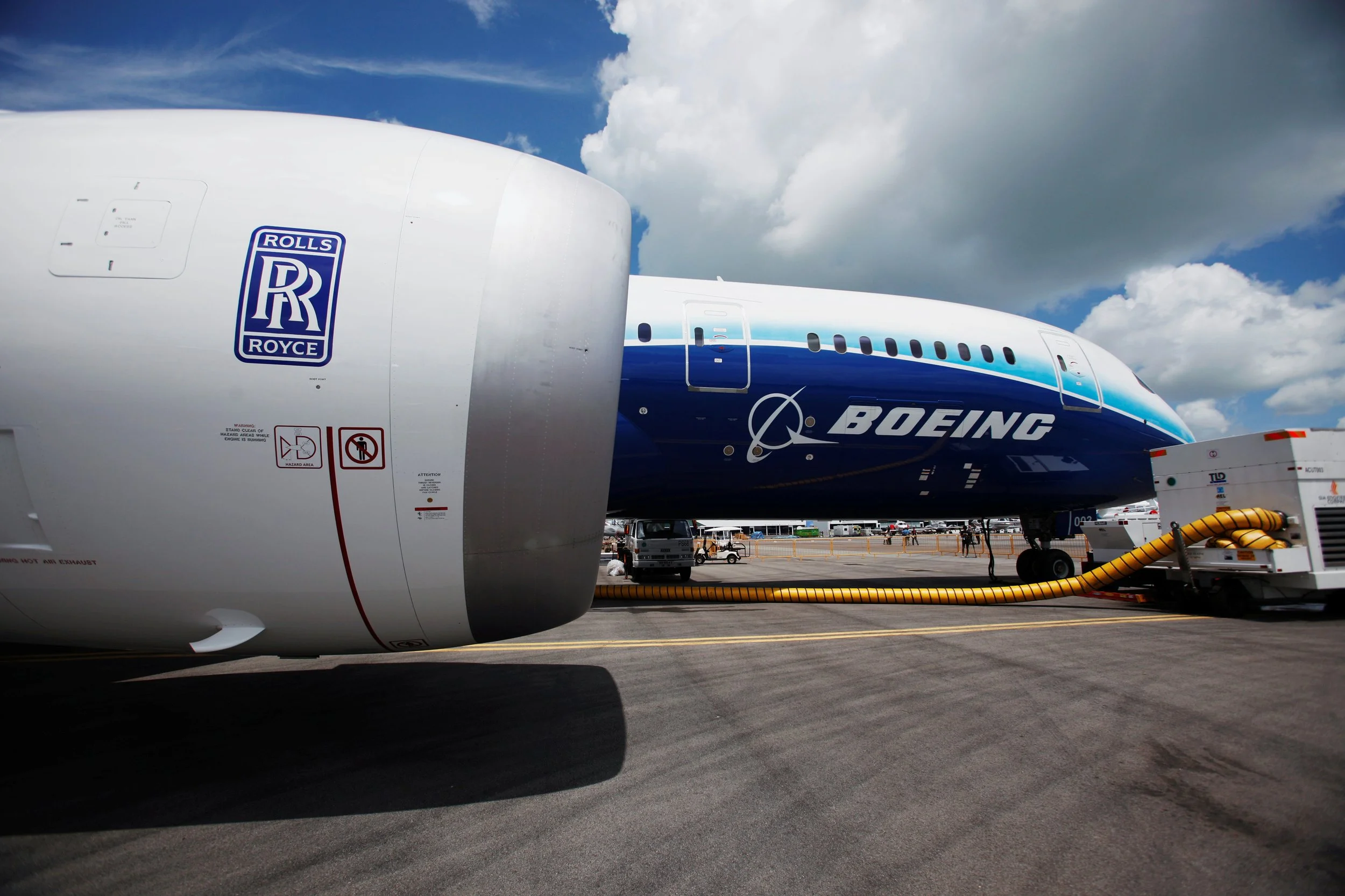
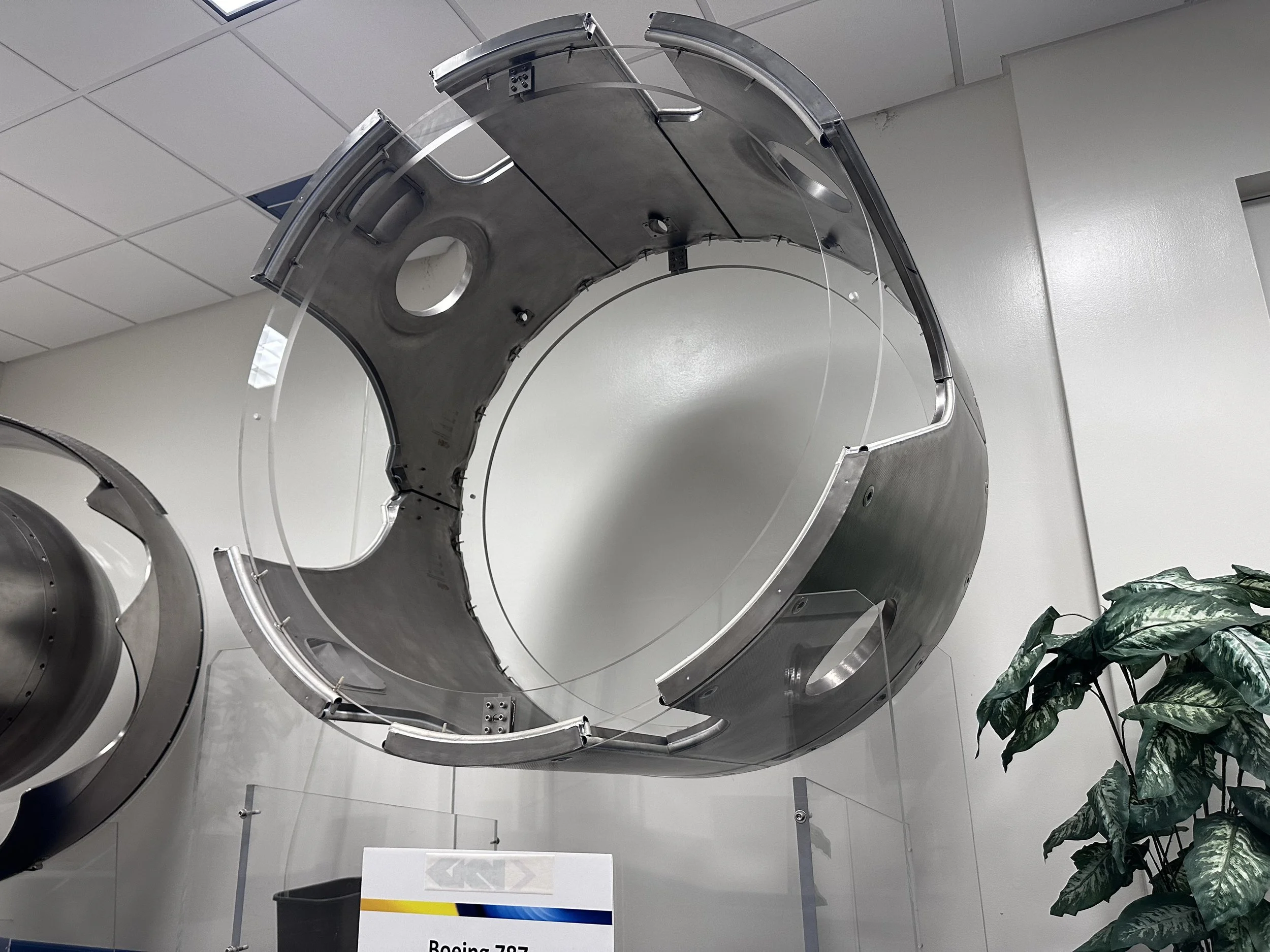
Rolls-Royce designs, manufactures, and distributes power systems for aviation and other industries and is the world's second-largest maker of aircraft engines. Rolls-Royce provides the engines for Boeing’s 787 with the Trent 1000 engine, and Airbus’ A350 with the Trent XWB-84 engine respectively.
Our Inner Core Fairings incorporate all-welded titanium honeycomb technology, which gives excellent sound suppression, along with a lighter, more durable, and more easily repaired metallic structure than composite alternatives. ASTECH is highly experienced in our unique fabrication and forming processes that transform advanced, ultra-hard metals and into complex finished shapes and structures.
Delegated Design Responsibility •
Titanium Acoustic-Attenuated Honeycomb Design •
Weight competitive, durable alternative to composite fairings •
Hot-Creep Formed •
Trent 700 EEC Cover - ITP Aero
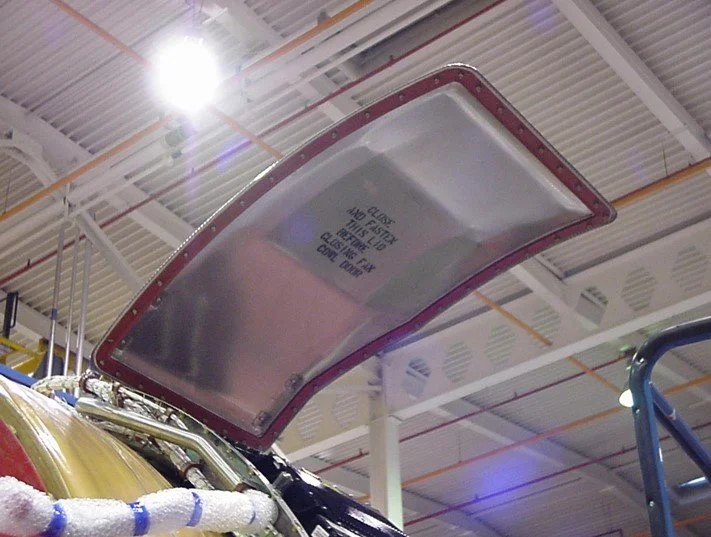
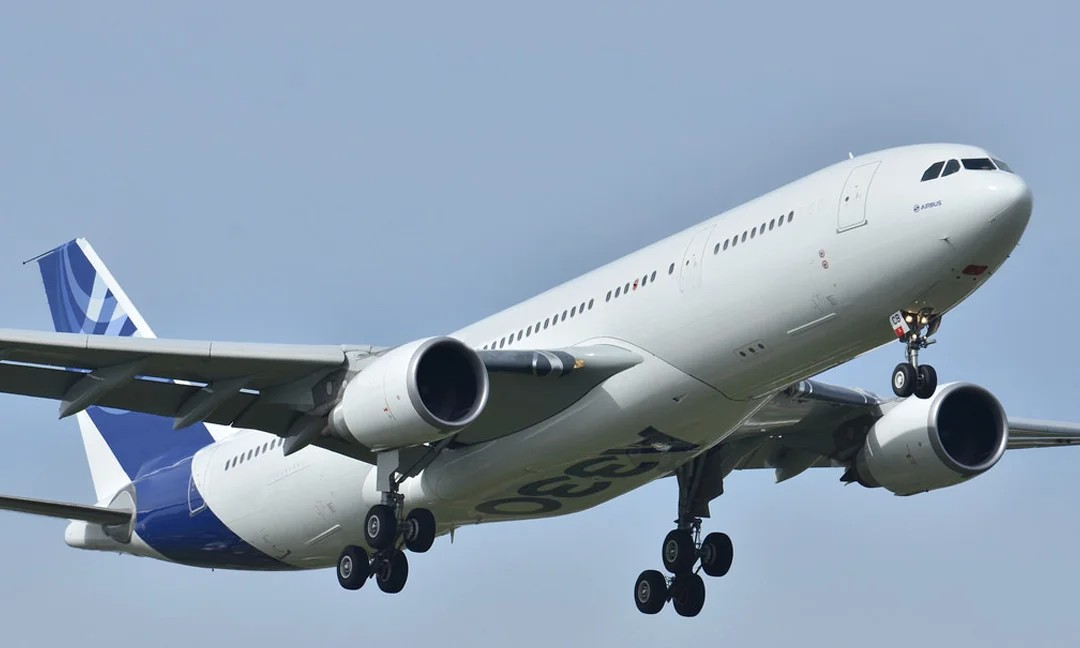
The Airbus A330 is a family of wide-body aircraft developed and produced by Airbus. The A330 has an option of 3 different engine choices, one of which is the Rolls-Royce’s Trent 700. This engine was developed solely for the A330 program. According to Rolls-Royce, “The Trent 700 delivers the power required for all weights of the A330, in particular for the higher weight aircraft operating in harsh environments. You can see this in the Middle East, where over 70% of A330 operations are powered by the Trent 700.”
ASTECH was delegated design responsibility to redesign a metal electronics cover on the Trent 700 engine. ASTECH redesigned the part, utilizing our in-house metallic honeycomb design, in stainless steel in lieu of the previous titanium SPF version, in order to address arising product requirements necessitating a more rigid design.
Delegated Design Responsibility
Stainless-steel Welded Honeycomb Design
Replaced sheet-metal with more robust Honeycomb Design
767/KC-46A Tanker Exhaust System - Boeing


The 767 is an American wide-body airliner developed and manufactured by Boeing. The 767 is also utilized by the United States Air Force as an aerial refueling tanker under the name of the KC-46A Pegasus. The Pegasus is currently in service with the Air Force, and still an active production program. The 767 itself first entered production in 1981, and continues to be built today.
ASTECH has taken part in the 767 program since its inception, and is responsible for, and took part in the design of the nozzle and plug for the exhaust. It is constructed out of stainless steel, stretch wrap formed, and utilizes ASTECH’s acoustic attenuation technology to help meet noise requirements.
Design Assist •
Stainless Steel Acoustic-Attenuated Nozzle & Centerbody •
Honeycomb Panel Design
Same design as provided for Pratt & Whitney PW4000 •
powered aircraft (747/767) since 1982
Concorde - Sud Aviation/British Aircraft Corporation


The Concorde was the first supersonic passenger-carrying commercial airplane, built jointly by aircraft manufacturers in Great Britain and France. The Concorde made its first transatlantic crossing on September 26, 1973, and it inaugurated the world’s first scheduled supersonic passenger service on January 21, 1976. The airliner could maintain a supercruise up to Mach 2.04 (1,350 mph) at an altitude of 60,000 ft. The Concorde is famed for holding the record for the fastest transatlantic crossing by a passenger aircraft, at 2 hours 52 minutes and 59 seconds from London Heathrow to JFK airport in New York.
ASTECH took total responsibility in the concept, design, tooling, and manufacturing of many different parts of the Concorde’s unique engines. This was the first application of all-welded honeycomb paneling, and its first true proof of concept in the industry. ASTECH had to meet strict design requirements to achieve this monumental goal of supersonic passenger flight, including having to last over 120,000 flight cycles, a 350°C peak temperature, and 160 dB overall sound pressure level (OASPL).
Total responsibility - Concept/Design/Tooling/Manufacture
1967-1976
First All-Welded Honeycomb application
Type 28 Nozzle - Stainless Steel & Nickel-Alloy
Thrust Reversers - Stainless Steel
Center Walls - Nickel-Alloy
Extreme Design Requirements
120,000 Flight Cycles
350°C Peak Temperature
160 dB OASPL

Space Shuttle Engine Heat Shield - NASA
The Space Shuttle program is a retired, partially reusable low Earth orbital spacecraft system operated from 1981 to 2011 by the U.S. National Aeronautics and Space Administration (NASA). The Space Shuttles could carry up to eight astronauts and up to 50,000 lb. of payload into orbit. When its mission was complete, the shuttle would reenter the Earth's atmosphere and land like a glider on a runway.
Our heat shield is used in the shuttle’s engine to protect the shuttle itself, its cargo, and the crew from the extreme temperatures of the engine. The heat shield’s honeycomb design allows it to handle extremely high temperatures while maintaining structural integrity.
Complete Design Responsibility •
Severe Thermal Requirements •
Spherical Contour •
Nickel-Alloy Welded Honeycomb Construction •